
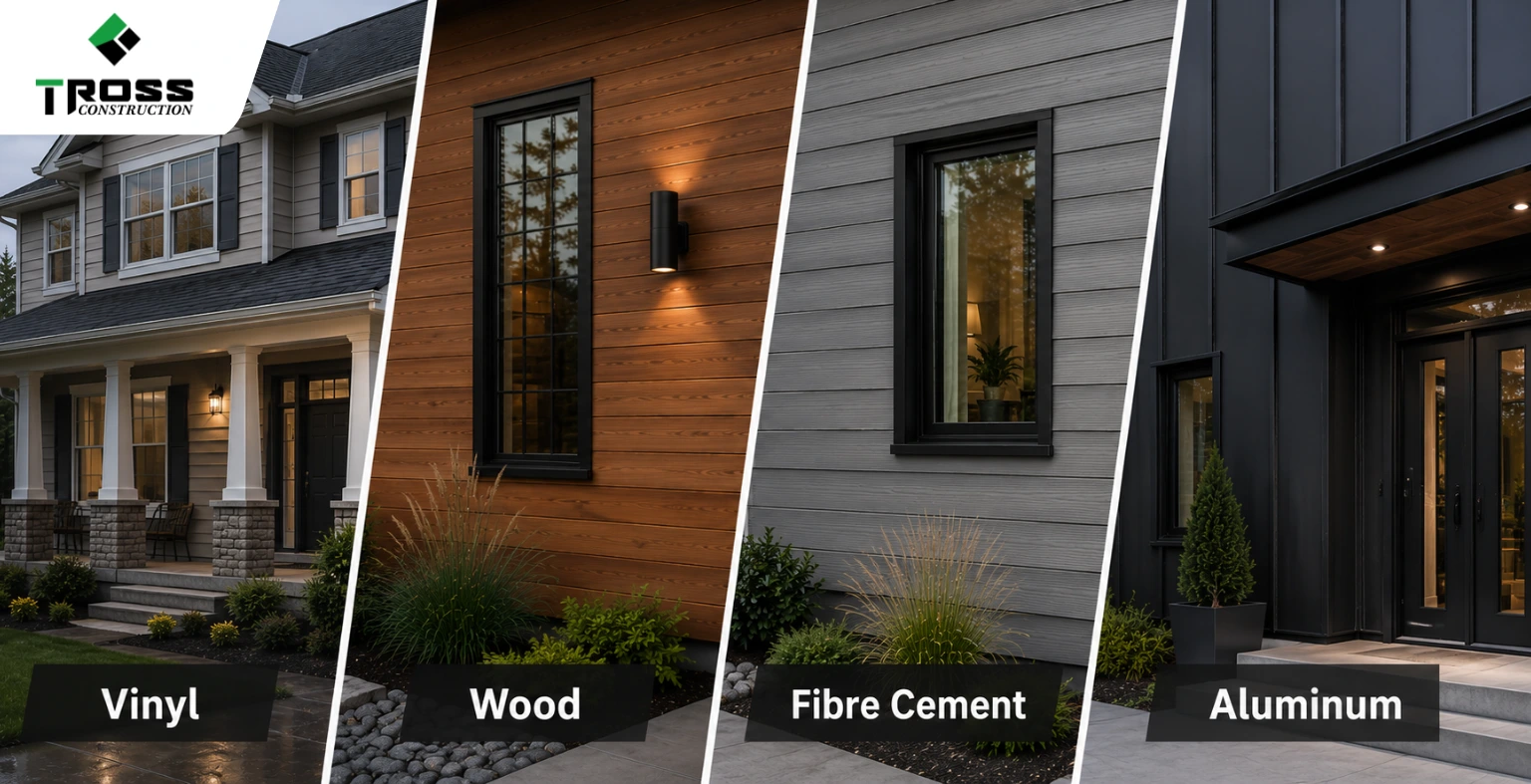
Did you know that Canada experiences some of the harshest weather conditions in the world? There is heavy snow and freezing temperatures. They have to manage rain and humidity. There are also strong winds. All this puts constant pressure on exterior surfaces. Many property owners spend thousands of dollars every year repairing weather-related damage.
That is why choosing the right material for your exterior surface matters so much. The right choice
- improves durability
- boosts energy efficiency
- increases property value
- enhances appearance
This blog explains the strengths and weaknesses of 5 materials.
By the end, readers will understand which option best suits their property and budget.
Why Material Selection Matters in Canada
This place’s climate varies greatly from one region to another. Montreal experiences
- hot summers
- freezing winters
- heavy snowfall
- frequent temperature changes
Exterior materials must withstand all these conditions without losing performance.
A quality exterior system gives several benefits
- Protection from moisture and weather damage
- Better insulation performance
- Improved appearance
- Longer structural lifespan
- Reduced maintenance requirements
Many property owners researching exterior wall cladding Canada solutions focus only on appearance. Durability and long-term value deserve equal attention.
Improving building envelopes can reduce energy consumption. It can improve overall efficiency. Proper material selection plays a role in that process.
Quick Comparison Table
| Material | Durability | Maintenance | Cost Range | Appearance | Weather Resistance |
| Vinyl | High | Low | Low | Good | Very Good |
| Wood | Moderate | High | Medium to High | Excellent | Moderate |
| Fibre Cement | Very High | Low | Medium to High | Excellent | Excellent |
| Aluminum | High | Low | Medium | Modern | Excellent |
Each Option In Detail
Vinyl: Affordable and Practical
It remains one of the most popular choices across this country. Many property owners select it because it gives strong performance at a low price.
Manufacturers produce vinyl panels in many colours and styles. This variety helps property owners match different architectural designs.
Advantages
- Budget-friendly pricing
- Minimal maintenance
- Strong resistance to moisture
- Wide range of colours
- Long service life
It is not like wood. It does not require frequent painting. Property owners usually clean it with water and mild detergent.
Potential Drawbacks
It may crack after severe impact during extremely cold weather. Lower-quality products may also fade after many years of sun exposure.
A Montreal property owner replaced aging exterior panels with insulated vinyl. The project improved the building’s appearance. It reduced heating costs during winter. The owner also reported less maintenance compared to the previous material.
Wood: Natural Beauty That Never Goes Out of Style
It remains a favourite option for people who value natural charm and character.
Cedar and engineered wood products continue to attract attention. This because of their appearance. Many traditional properties have wood surfaces. This is because they complement classic and modern designs.
Advantages
- Warm appearance
- Strong visual appeal
- Design flexibility
- Excellent customisation options
Wood works well for premium residential projects where appearance ranks as a priority.
Potential Drawbacks
Wood requires regular care. Property owners apply protective coatings and paint to maintain its condition.
Moisture and insects may affect untreated wood over time. Also weather exposure will have an impact.
Best Applications
- Traditional properties
- Luxury residential projects
- Cottage-style buildings
- Heritage renovations
Maintenance costs remain higher. But many owners feel that the visual appeal justifies the investment.
Fibre Cement: Strength and Longevity
It has gained significant popularity over the last few years. This material combines
- Cement
- Sand
- Cellulose fibres
This helps to produce a highly durable exterior solution.
Many industry professionals recommend fibre cement for regions with severe weather conditions.
Advantages
- Excellent fire resistance
- Strong moisture protection
- Long lifespan
- Resistance to rot
- Resistance to insects
Many fibre cement products replicate the appearance of natural wood. But they require far less maintenance.
Potential Drawbacks
Installation requires specialised skills. This is because the material weighs more than vinyl and aluminum.
Initial costs may exceed vinyl pricing. But long-term durability offsets that investment.
Case Study
A duplex renovation project in Montreal replaced aging exterior panels with fibre cement boards. After several winters, the surface maintained its appearance with minimal upkeep.
Aluminum: Modern Appearance with Excellent Durability
This remains a trusted choice for properties. Modern manufacturing methods have improved appearance and performance.
This material works well for contemporary designs and commercial-style architecture.
Advantages
- Lightweight construction
- Rust resistance
- Minimal maintenance
- Long service life
- Excellent weather protection
Aluminum performs particularly well in regions that experience heavy rain and snow.
Potential Drawbacks
Severe impacts may dent aluminum surfaces. Repairs sometimes require replacing affected sections.
Modern Design Appeal
Many architects favour this material because it delivers clean lines and a contemporary appearance. It pairs well with
- Glass
- Stone
- Other modern building materials
Which Option Performs Best in Canadian Weather?
The answer depends on priorities.
For Budget-Conscious Property Owners
Vinyl provides the best value. It gives
- Durability
- Affordability
- Low maintenance.
For Natural Appearance
Wood remains the leading choice. Its authentic texture and character remain difficult to match.
For Maximum Durability
Fibre cement ranks first. It handles
- Moisture
- Temperature changes
- Fire exposure
For Contemporary Designs
Aluminum is best. This is because of its modern appearance and strong weather resistance.
When evaluating exterior wall cladding canada options, property owners should balance
- Appearance
- Maintenance
- Durability
- Budget
Factors to Consider Before Making a Decision
Climate Conditions
Properties in Montreal face different challenges than properties in milder regions.
Material performance should match local weather conditions.
Maintenance Expectations
Some owners prefer minimal upkeep. Others value appearance enough to perform regular maintenance.
Budget
Initial cost matters. But long-term maintenance and repair expenses also affect value.
Energy Performance
A properly installed exterior system improves insulation performance. It may reduce heating and cooling expenses.
Professional Installation
Even the highest-quality material can fail if installation quality falls short. Good workmanship remains essential for long-term success.
Expert Insight
Construction professionals recommend focusing on lifecycle cost rather than installation cost alone.
A lower-priced material may require more maintenance over twenty years. A premium material may cost more initially. But it can save money through reduced repairs and longer lifespan.
This approach helps property owners make better long-term decisions.
Final Thoughts
Choosing the right exterior material requires careful consideration of
- Climate
- Budget
- Maintenance expectations
- Design preferences
Vinyl gives affordability and simplicity. Wood delivers unmatched natural beauty. Fibre cement provides durability. Aluminum brings modern style and weather resistance.
When comparing exterior wall cladding Canada solutions, focus on long-term value rather than short-term savings. The right choice protects the structure. It improves energy performance. It enhances appearance for many years.
If you are planning an exterior renovation project in Montreal the experienced team at Tross Construction can help you. Contact us today for a free consultation and estimate.
FAQs
Which material offers the best sound reduction?
Fibre cement generally provides better sound reduction than vinyl and aluminum. This is because of its density and thickness.
Can exterior materials affect insurance premiums?
Some insurers may give favourable rates for materials with strong fire resistance and durability characteristics. Policies vary between providers.
Which option gives the widest colour selection?
Vinyl typically provides the largest range of factory-finished colours and design styles.
Does surface colour affect energy efficiency?
Darker colours absorb more heat. Lighter colours reflect more sunlight. This factor may influence temperature levels during summer months.
Can exterior renovation projects improve resale appeal?
Many buyers view updated exterior surfaces as a valuable upgrade. This is because they improve appearance. They reduce future maintenance concerns.